Inventory Out of Sync Across Channels
Real-time stock synchronization keeps every storefront, marketplace, and wholesale channel aligned with what is actually available.
E-Commerce Software Solutions
As sales grow, disconnected inventory, manual order processing, and a strained checkout can hold the business back. Canduit builds custom commerce systems around how you sell—direct to consumer, wholesale, or both.
E-commerce software runs an online store from the product page through checkout and shipping. It connects the storefront, inventory, orders, payments, warehouses, physical locations, and wholesale channels.
Off-the-shelf platforms cover storefronts, checkout, and basic inventory. Custom software fills the gaps with the pricing rules, return workflows, channel synchronization, and integrations specific to your business.
E-Commerce Software Solutions:
Custom-built systems connecting storefront, inventory, order processing, and payments in one platform shaped around your catalog and sales channels.
We build custom e-commerce and ERP systems for online retailers and B2B sellers. Not a theme installed on a platform. Not a plugin stack that breaks with every update. Software shaped around your actual catalog, your actual channels, and your actual order volume.
Across 500+ projects and 10+ years, Canduit has delivered storefronts, inventory synchronization systems, and B2B ordering portals for retailers scaling beyond off-the-shelf platforms.

Storefront, inventory, orders, payments, and fulfillment in one connected view.
Common growth barriers that create overselling, manual work, slow checkout, and lost margin.
Real-time stock synchronization keeps every storefront, marketplace, and wholesale channel aligned with what is actually available.
Connected order management routes orders directly to fulfillment without spreadsheets, duplicate entry, or avoidable delays.
Wholesale pricing, minimum quantities, and payment terms remain distinct while catalog and inventory data stay unified.
Checkout architecture is designed for real traffic patterns and seasonal spikes, protecting speed and conversion when demand peaks.
Owning the software creates a predictable cost structure instead of transaction fees that continue rising with revenue.
A fast storefront and catalog structure built around how customers actually shop.
Real-time stock accuracy across websites, marketplaces, and wholesale channels.
Orders routed automatically to the right fulfillment process with no re-entry.
Wholesale pricing, minimum quantities, and payment terms alongside retail.
Conversion-focused checkout integrated with the payment gateways you choose.
Order history, saved preferences, and structured data that support retention.
Carrier integration and shipment tracking connected directly to order status.
Live visibility into sales, conversion, inventory turnover, and performance.
There is no single best platform for every seller. The right fit depends on order volume, sales channels, and whether B2B functionality needs to coexist with a consumer storefront.
Custom is worth considering when platform limits force workarounds, plugins slow every update, or transaction fees exceed the value of ownership. A modest, simple catalog may still be best served by an existing platform, and we will say so honestly.
Ask these questions before you choose:
A proven process adapted to your catalog, sales channels, order volume, and selling calendar.
We map your catalog, channels, and order workflow before writing a line of code.
Architecture and storefront design follow discovery, not a preset template.
Iterative delivery keeps the system aligned with how your team actually sells.
Testing covers real traffic, order scenarios, checkout paths, and peak loads.
Rollout follows your sales calendar to minimize disruption during active periods.
Maintenance, updates, and scaling continue as order volume and channels grow.
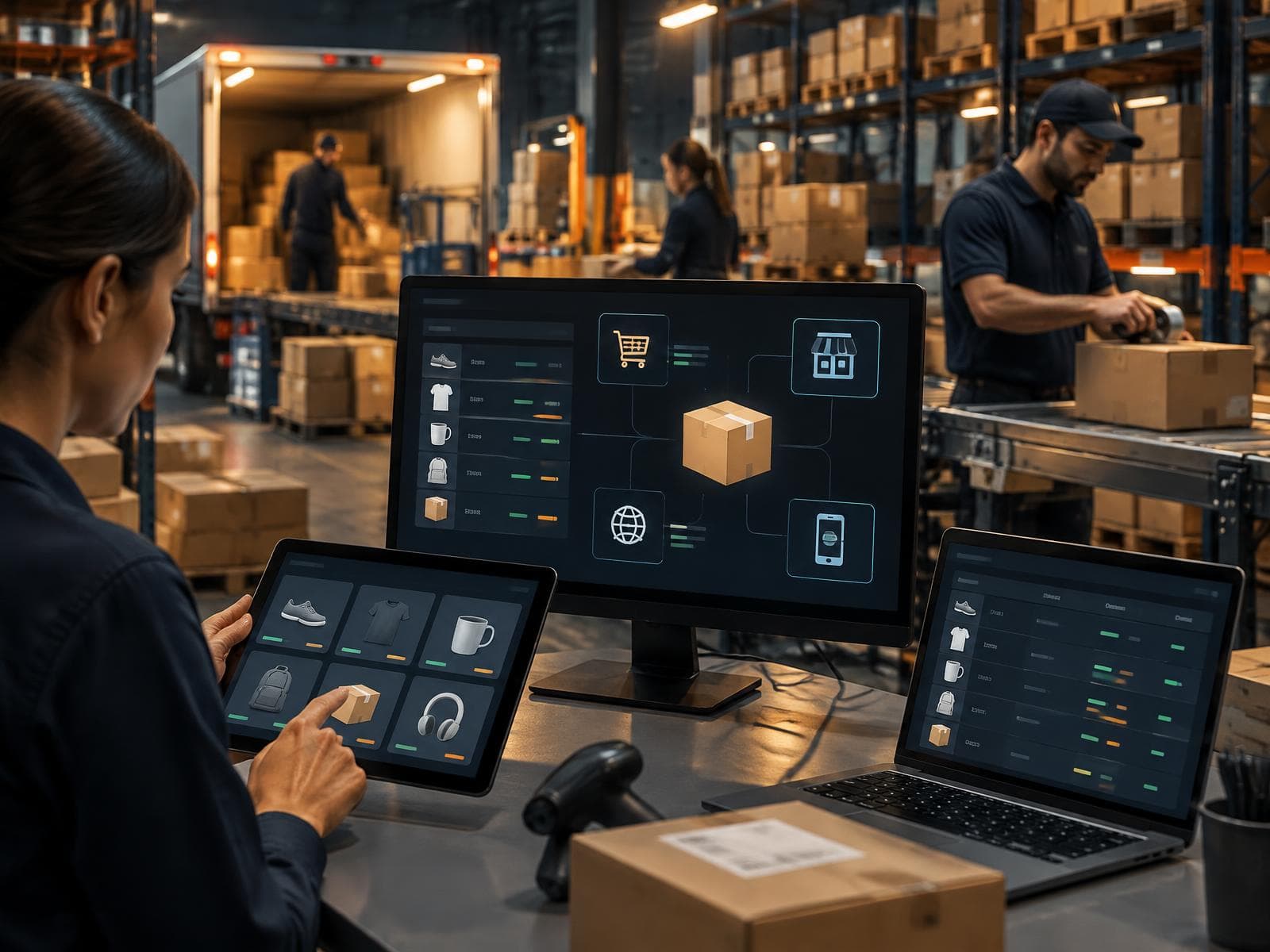
Connected selling across storefronts, marketplaces, wholesale accounts, and fulfillment.
E-commerce is not one business model. Each type has its own customer journey, workflow, and pressure points.
Fast, conversion-focused storefronts paired with inventory accuracy and fulfillment that hold up as order volume scales.
Tiered pricing, account-based ordering, minimum quantities, and payment terms designed for wholesale buying.
Retailers selling across a website, marketplaces, and physical locations need inventory that stays accurate everywhere at once. Canduit has also built systems addressing similar multi-location inventory needs for wholesale distribution companies, where stock accuracy across locations carries the same weight.


A team that understands storefronts, checkout, inventory, fulfillment, and peak demand.

Built around your actual catalog and sales channels, not a template.

One team from discovery through ongoing support.

Clear stages, timelines, and regular delivery visibility.

Custom build or targeted add-ons to your existing platform, depending on your timeline and budget. Explore our ERP solutions or see how we've approached similar builds for wholesale distribution and manufacturing.
Explore our ERP solutions, wholesale distribution systems, and manufacturing ERP.
Tell us what is breaking, what you have outgrown, or what you are trying to build. We will tell you honestly whether custom software is the right move for your store.
No obligation. No sales script. Just a straight answer.
Straight answers about how custom e-commerce software works, how it compares to off-the-shelf platforms, and what it costs.
E-commerce software solutions are the systems that run an online store, covering the storefront, inventory management, order processing, and payment handling. Custom solutions connect these pieces into one platform shaped around a specific business, rather than a generic template.
The best e-commerce software solutions depend on order volume, number of sales channels, and whether B2B functionality is needed. A business outgrowing a standard platform's limitations usually benefits from a custom build tailored to its actual catalog and workflow.
Platforms cover core storefront and checkout functionality well, but custom e commerce software solutions development adds business-specific logic: multi-channel inventory sync, wholesale pricing tiers, or integrations a platform doesn't support out of the box.
Top b2b e commerce software solutions need tiered pricing, minimum order quantities, account-based ordering, and payment terms alongside standard catalog and checkout functionality, since wholesale buyers order differently than retail customers.
Yes. Well-built e commerce solutions software integrates with existing ERP, accounting, or inventory systems rather than replacing them, so data flows between the storefront and back-office operations without duplicate entry.
It depends on complexity and growth plans. A small store with simple, low-volume sales may do fine on an existing platform. Custom software becomes worth it once platform fees, workarounds, or channel complexity start costing more than a custom build would.
Cost depends on scope. A single-channel storefront and a multi-channel platform with B2B ordering are very different projects. We provide a detailed quote after a discovery call, once we understand your actual catalog and order volume.

Canduit is a dynamic software company specializing in enterprise solutions like ERP, CRM, and HRMS, as well as custom software development, designed to simplify and empower businesses.


Copyright © 2026 Canduit. All rights Reserved