Custom Storefront Design & Development
Product pages, category navigation, and checkout built around how your customers actually shop, not a stock theme with your logo dropped in.
E-Commerce Development
A storefront that looks nice in a portfolio and a storefront that converts are two different things. Canduit's e-commerce software development services focus on the second one: fast pages, checkout that doesn't lose customers at the last step, and a backend your team can actually run without calling a developer every time inventory needs updating.

Catalog, checkout, and inventory — working as one system.
Building an online store is more than picking a theme. It's product catalogs, payment processing, tax rules, shipping logic, and inventory that all have to work together without breaking the moment traffic spikes on a sale day.
Canduit builds custom e-commerce development around how your business actually sells, whether that's a single storefront, a multi-brand setup, or a B2B ordering portal that doesn't look anything like a typical retail checkout.
A lot of e-commerce projects start on a page-builder platform because it's fast, then hit a wall the moment the business needs something the platform wasn't built for. Custom checkout flows. Complex pricing rules. An inventory system that syncs with a warehouse instead of a spreadsheet.
Canduit builds e-commerce applications software development around your actual catalog and sales process, so you're not stuck redesigning the whole store two years in because the platform capped out.

Custom features get built when the platform's built-in options run out, instead of you working around a limitation.

Customer and order data lives in systems you control, not locked inside a platform you'd lose access to if you ever switch.

Whether that's 50 SKUs or 50,000, the architecture is scoped to your real product data, not a generic demo store.
A storefront that converts needs more working behind the scenes than most buyers realize. Here's what's covered in a Canduit e-commerce build.
Product pages, category navigation, and checkout built around how your customers actually shop, not a stock theme with your logo dropped in.
Stripe, PayPal, or the processor your business already runs on, integrated with PCI-compliant handling so customer payment data isn't a liability sitting on your servers.
Real-time stock tracking that updates across every sales channel, and where it makes sense, synced directly with our ERP business software so inventory, finance, and fulfillment aren't living in three disconnected tools.
Tiered pricing, bulk discounts, subscription billing, or B2B-specific rules that a standard checkout flow usually can't handle without a workaround.
Most online shopping happens on a phone now, so the storefront gets built mobile-first. If your brand also needs a dedicated shopping app, our mobile app development team builds it on the same product and inventory data.
Dashboards that show what's actually driving sales and where customers are dropping off, so decisions about the store are based on real numbers instead of a hunch.
Here's what tends to change once a business moves off a rigid template and onto a platform built around how it actually sells.
A checkout built around your customers' actual buying habits loses fewer people at the cart than a generic default flow.
Custom pricing rules, product configurators, or B2B ordering logic get built to spec instead of forced into a workaround.
Speed affects both conversion and search ranking. Custom-built stores tend to load faster than heavily plugin-loaded platform sites.
Real-time syncing across channels means fewer overselling situations and fewer manual stock corrections.
Built on infrastructure that holds up during a sale event or seasonal spike, not just on an average Tuesday.
No monthly platform fees tied to your revenue, and no risk of a third-party platform changing its rules on you overnight.
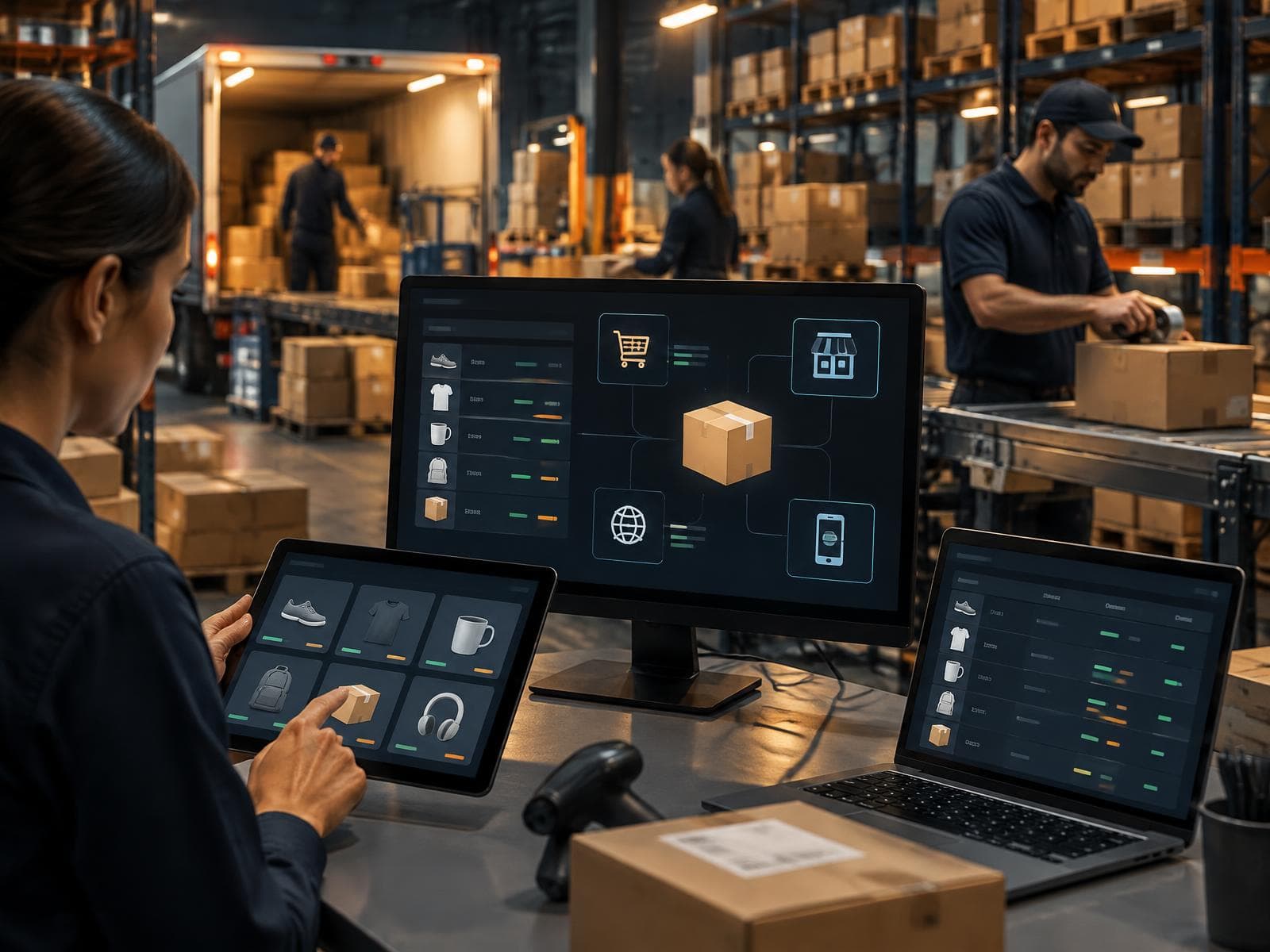
One back end, consistent inventory across every channel.

Selling on your own site is one thing. Selling across your site, a marketplace, and a wholesale portal at the same time is a different problem, and it's one most off-the-shelf platforms handle poorly.
Canduit builds e-commerce applications software development for businesses managing multiple sales channels from one back end, so inventory and pricing stay consistent everywhere. For brands layering in personalized recommendations or automated customer support, our AI integration team, the same group behind Yarden AI, builds that directly into the storefront rather than adding it on as a bolted-on widget.
Here's what a Canduit e-commerce project looks like, from the first conversation to a live store.
We start with your product catalog, your customers, and your sales process, so the store gets built around how you actually sell, not a generic template.
Storefront and checkout design mapped to your brand and your customers' shopping habits, tested before development starts.
Front end, checkout, and backend systems built in sprints, with a working store you can review along the way. Where the project also needs custom internal tooling, our web app development team builds the admin side alongside the storefront.
Payment gateways, shipping providers, and inventory systems connected and tested under real order scenarios, not just a demo checkout.
We go live in a way that fits your business, whether that's a full cutover or a staged rollout that keeps your current store running until the new one is proven out.
Support doesn't stop at launch. Updates, bug fixes, and scaling support are backed by our DevOps practices so your store stays fast and online during your busiest sales periods.
We could tell you why Canduit is worth working with. We'd rather let the people who've actually gone through a project with us tell you instead.

10 months ago
I recently took a subscription of Canduit’s ERPfy, and its usefulness has surpassed my expectations. The team was super attentive to all my customization requests and even suggested a few small tweaks that made the system run even more effective for my startup. They also provided clear, helpful tutorials that made it easy to get comfortable with the already user-friendly interface of ERPfy. Overall, great experience and most importantly, no one else offered such a good quality ERP package at such a good price.

10 months ago
My business was in chaos. Got a good erp for my business from them. Satisfied with their after sales service.

10 months ago
I contacted them to develop an e-commerce website for my business. Happy with their service so far.

a week ago
As the Supply Chain Manager at Cowbell Group, I highly recommend Canduit Software Services. They provided us with a robust ERP solution tailored to our supply chain operations, and it has made a significant difference in how we manage procurement, inventory, and vendor coordination.

A team that builds the store around your business, not the other way around.

Storefront, backend, payments, and integrations handled by one accountable team, not a designer handing off to a separate developer who's never seen your requirements.

A written scope and realistic timeline before you commit, laid out on your first call through our contact page. Not an open-ended build with no clear finish line.

Architecture planned for peak traffic from day one, not patched together after the site goes down during a launch or a holiday sale.

Your store doesn't have to be an island. We connect it to ERP, inventory, and finance tools so order data flows where it needs to go automatically.

Maintenance, feature updates, and scaling support included after go-live, not a handoff the moment the store is live.
Whether you're launching your first store or replacing a platform you've outgrown, Canduit can build e-commerce software around how your business actually sells. Learn more about our team on the about page, or book a free consultation to talk through your project.
Cost depends on catalog size, the number of custom features, and which systems the store needs to integrate with. A straightforward storefront costs far less than a multi-channel platform with custom pricing logic and ERP integration. We provide a specific quote after understanding your requirements during discovery.
A standard storefront can launch in a matter of weeks. A more complex build with custom checkout logic, multiple integrations, or a B2B ordering portal typically takes a few months. Your timeline gets scoped around your actual requirements, not a generic industry estimate.
Page builders work fine for simple stores with standard checkout needs. Once you need custom pricing rules, complex inventory logic, or an experience the platform's templates don't support, custom e-commerce development usually ends up cheaper long-term than paying for workarounds and plugins that never quite fit.
Yes. We handle migrations from platforms like Shopify, WooCommerce, or Magento, including product data, customer accounts, and order history, planned around minimizing downtime and protecting your search rankings during the switch.
Yes. Canduit builds e-commerce applications software development with integrations into the inventory, finance, and ERP systems you already run, so stock levels and order data update automatically instead of requiring manual entry across separate tools.
That's planned for at the architecture stage, not fixed after the fact. We build on infrastructure that scales with demand, so a seasonal sale or a viral launch doesn't take the site down at the worst possible moment.
Yes. B2B ordering has different needs than retail, tiered pricing, minimum order quantities, approval workflows, and account-specific catalogs. We build these as part of our e-commerce website development company services, either as a standalone portal or alongside a retail storefront.

Canduit is a dynamic software company specializing in enterprise solutions like ERP, CRM, and HRMS, as well as custom software development, designed to simplify and empower businesses.


Copyright © 2026 Canduit. All rights Reserved
