Case study 03
ERP Software for Chemical Manufacturing: From Pen and Paper to One System
n a chemical plant, a missing drum or an unpaid invoice is more than a paperwork problem. It is lost stock and lost cash. This case study shows how we built ERP software for chemical manufacturing for Marine Chemical Co. Ltd., and what changed once procurement, production, sales and accounts ran on one system instead of notebooks.
Asif Hasan, CTO at Canduit
Published · Updated · 6 min read
- Client
- Marine Chemical Co. Ltd., chemical manufacturer
- Size
- 3000+ tonnes of sodium silicate per day, 2 plants
- Timeline
- 6 months
- Team and users
- 3 engineers, 35 users
- Stack
- Python, MariaDB, Redis
The challenge
Every department ran on pen and paper
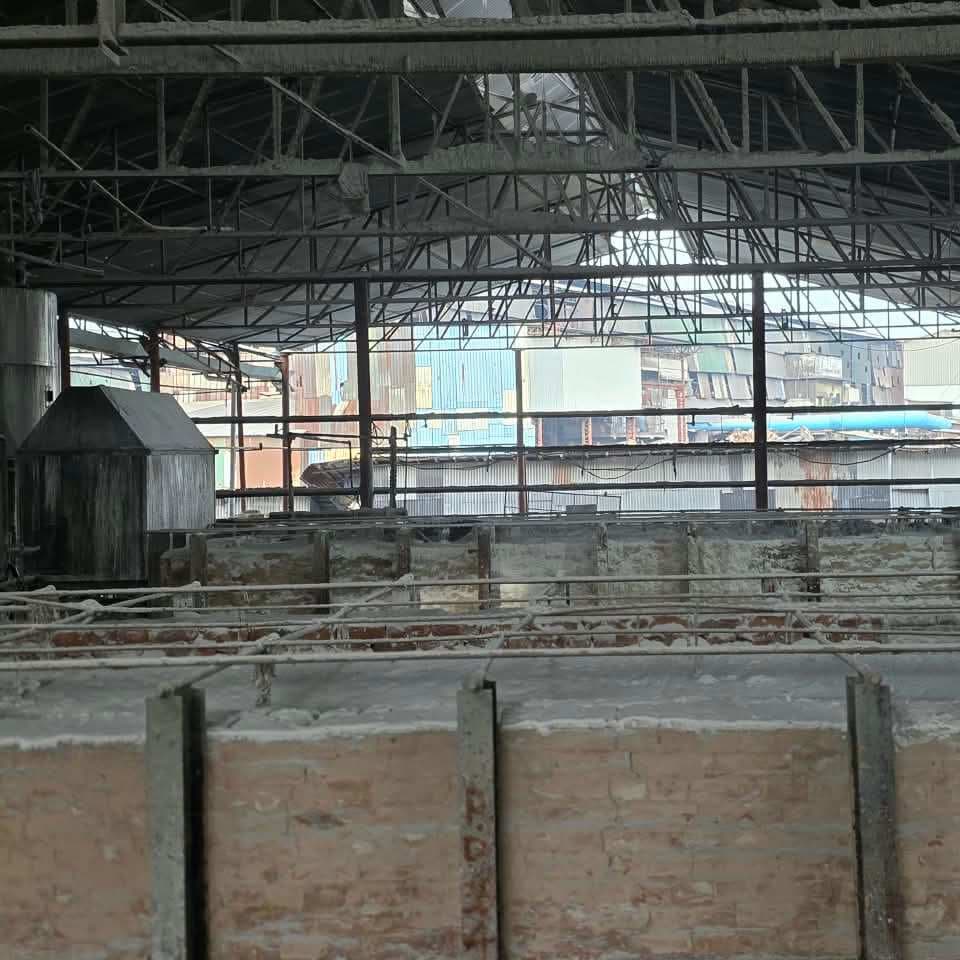
Marine Chemical Co. Ltd. is a chemical manufacturer. Before the project, none of its departments followed a structured process. Stock, purchase and sales data were all kept with pen and paper.
That meant each team held its own version of the truth. The warehouse, the factory floor and the sales team could not check one another's numbers, and nobody could say with confidence what the business really held or what customers really owed.
The moment it broke.
Stock went out, purchases came in, and the figures sat in different notebooks. Production was not tracked at all, so material kept disappearing between purchase and sale. At the same time, customers were buying beyond their credit allowances.
Stock, purchase and sales data lived on paper
Every record was written by hand. Purchase entries, stock counts and sales were never matched against one another, so the numbers drifted apart. Finding out why meant digging through notebooks, and small mistakes were easy to miss.
Manufacturing was untracked, so inventory kept shrinking
Nothing recorded what went into production or what came out. Without that record, no one could tell a normal loss from a missing item. The result was steady inventory shrinkage that the company could see but could not trace.
Credit limits and field sales had no control
Customer credit allowances were being exceeded, because no system stopped a sale when a customer was over the limit. The sales team also worked in the field with no tracking, so management could not see who visited which customer, or when.
The solution
One ERP system, three connected areas
We implemented a complete ERP system covering procurement, manufacturing, sales, accounting, HR, payroll and a mobile app. Stock, purchase and sales data now stay in sync, so every team works from the same numbers. To see how we approach this work, read about our ERP solutions and our ERP for manufacturing approach.
Procurement and manufacturing
Buying and production recorded in the system.
- Purchase data kept in sync with stock
- Production tracked inside the ERP
- All inventory maintained through the software
Sales and mobile app
Sales controlled and visible, in the office and in the field.
- Credit restrictions enforced by the software
- Sales data in sync with stock and purchases
- Field visit tracking through the mobile app
Accounting, HR and payroll
Finance and people records in the same system.
- Accounting on the same platform as stock and sales
- HR and payroll modules included
- No separate paper registers
| What changed | Before | After |
|---|---|---|
| Records | Stock, purchase and sales data kept with pen and paper | Stock, purchase and sales data in sync in one ERP |
| Inventory | Manufacturing untracked, leading to shrinkage | All inventory maintained through the software, shrinkage negligible |
| Customer credit | Credit allowances being exceeded | Credit restrictions enforced by the software |
| Field sales | No tracking of the sales team in the field | Field visits tracked through the mobile app |
| Paper | Paper-based systems in every department | Paper-based systems completely eliminated |
The results
Measured after launch
Outcomes reported after go-live at Marine Chemical Co. Ltd.
- Inventory shrinkage, now that all stock runs through the software
- Negligible
- Paper-based systems left, as they were completely eliminated
- Zero
- Modules working together in one ERP, including a mobile app
- 7
Our process
From discovery to launch
Discovery · 2 wks
Discovery
Mapped how stock, purchase, production and sales worked in each department.
Design · 4 wks
Design
Designed one shared data model and the credit rules.
Build · 14 wks
Build
Built the ERP modules and the field sales mobile app.
Launch · 4 wks
Launch
Moved every department off paper and trained the team.
Before, our stock, purchase and sales records were all on paper, and we never really knew where things stood. Now every item goes through the system, our losses are almost gone, and customers cannot go past their credit limit. Our sales team even logs visits from their phones.
When stock, purchases and sales live in one system, inventory stops going missing, credit stays under control, and paper is no longer needed.