How You are Losing Leads without Realizing it
This article walks you through the shift in digital marketing practices in 2026 and how forward-thinking businesses are leveraging them.
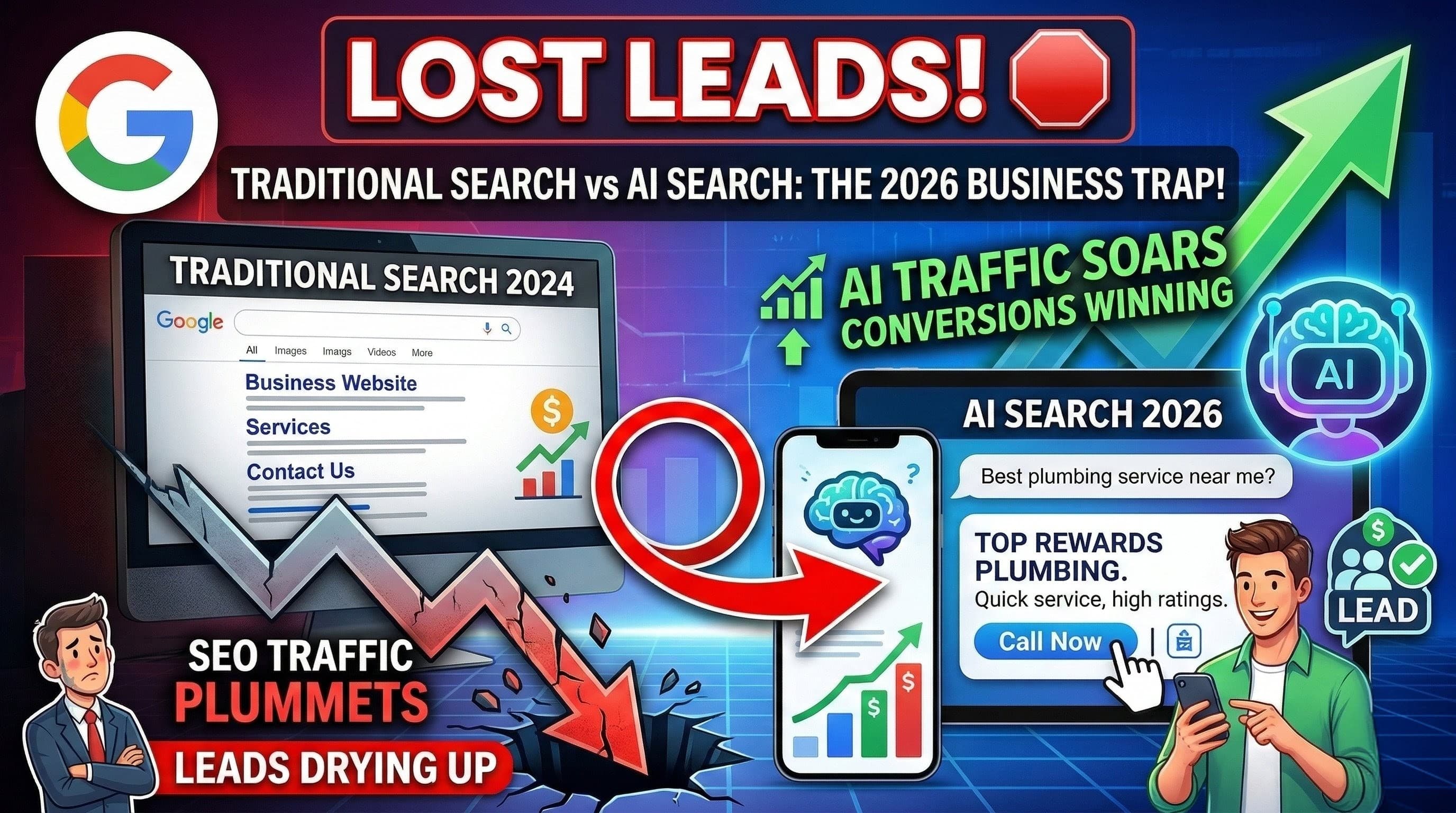
You ran the ad. You boosted the post. You even hired someone to "do SEO".
And yet, you are not getting the results as they are supposed to be.
The truth is that even if your business does everything right, half of the people looking for what you offer may not be able to find it. This isn't a problem with the marketing budget. It's a structural issue. And it's slowly killing the lead pipelines of businesses in Bangladesh and around the world.
Let's talk about what's really going on and what you can do to stop the gap from getting bigger.
The Zero-Click World Is Already Here
When someone searches for "best accounting firm in my city" or "reliable freight forwarding for my business", a growing number of them never make it to your website. They get their answer from an AI assistant like ChatGPT or Google's Gemini, or they find a recommendation in a short video on TikTok or Instagram Reels, and they stop right there.
More than 58% of searches in 2026 will end with what industry experts call a "zero-click" result. The user got what they needed without having to go to any websites.
You won't be able to reach a whole group of potential customers if AI tools and social media aren't showing your business as the answer. They moved on. They got someone else to do it. And you never knew they were looking.
This is the Invisibility Trap.
GEO: The New Battlefield You Never Heard Of
Most business owners are still thinking about SEO, about ranking on Google's first page. That still matters. But it's no longer enough on its own.
Generative Engine Optimisation, or GEO, is a new field. Consider this: an AI assistant does not display a list of links in response to a query. It examines hundreds of sources, selects the companies that seem most reliable and pertinent, and then includes their names in its response. You just don't exist in that AI's world if your company isn't written about properly, referenced appropriately, or organised for AI to comprehend.
For SMEs doing lead generation in Bangladesh, this is urgent. Your competitors in larger markets are already optimizing for AI citations. The businesses that act now will own those AI recommendations for years. The ones that wait will find themselves locked out.
At Canduit, we've built GEO frameworks specifically for businesses in this market, ensuring that when a potential client asks an AI assistant for a recommendation in your category, your name is part of that answer.
Community-Led Growth: The Trust Layer Your Ads Can't Replace
Here's something your target audience won't tell you directly: they don't trust your ads.
Not due to the lack of quality of your product. But because they've witnessed too many well-executed, overly optimistic campaigns. People who are similar to them are what they trust. "I used this service, and it worked," a peer said. A co-worker posting a result in a group on WhatsApp. An uninvited review posted by a client.
The smartest businesses that are growing in 2026 aren't just running ads. They're making what we call "Digital Campfires", which are small, high-trust groups on WhatsApp, Facebook Groups, or LinkedIn where real customers get together, talk about their experiences, and naturally promote the brand.
This is growth led by the community, and it builds a layer of trust that no paid campaign can match. Every satisfied customer becomes a distribution channel. Every genuine testimonial does more conversion work than ten sponsored posts.
The businesses that are winning right now aren't the ones that are the loudest. People trust them the most.
The Reasons Your Ad Expenses Are Increasing
If you've noticed that your Facebook or Google ads are costing more per lead than they did two or three years ago, you're not guessing; it is really happening.
The small trackers known as third-party cookies, which enabled platforms to follow your customers online and show them relevant retargeted advertisements, are mostly dying now. Without them, ad platforms are guessing. That guesswork costs you money.
Nowadays, companies that still only use paid targeted advertising are paying up to three times as much per lead as those that have developed a "first-party data" strategy. First-party data is simply audience information that you directly own, such as your SMS contacts, WhatsApp subscriber list, and email list.
When you own your audience, you don't pay a platform every time you want to reach them. Rising CPMs and algorithm changes don't affect you. You have a direct line to people who already know you.
It is no longer optional to build this owned audience. Businesses that will scale affordably and those that will gradually drain their marketing budgets into a platform's coffers are separated by this moat.
Hyper-Personalization: Competing Like a Multinational on an SME Budget
In 2026, your clients will expect you to be aware of their current purchasing stage and address them directly.
This is now feasible for companies of all sizes thanks to AI-driven marketing automation. Workflows that automatically send a follow-up message when a lead visits a particular page, offer a discount only to clients who haven't made a purchase in 90 days, or share a case study relevant to a prospect's industry can all be set up by a small service company.
This is hyper-personalization, and it's what makes a growing local business feel as responsive and attentive as a large multinational. It's not about sending more messages. It's about sending the right message to the right person at exactly the right moment.
The businesses using AI-driven marketing automation are not just saving time. They're closing deals faster and with less human effort.
Conversational Commerce: Closing Sales In the Chat
Here's a shift that is accelerating rapidly in Bangladesh, a market where WhatsApp and Messenger are often more trusted than websites.
In Bangladesh, where WhatsApp and Messenger are frequently more trusted than websites, this trend is quickening.
Consumers no longer want to complete a form, wait for a callback, and then endure a pitch. They want to use the app they're already using to ask a question and receive a response immediately.
For social commerce trends in 2026, this is one of the most significant shifts in how buying decisions get made. Your website becomes a supporting asset. The conversation becomes the conversion point.
Businesses that set up these intelligent chat systems are seeing dramatic drops in response time and meaningful improvements in close rates because the sale happens in the moment of intent, not after two days of back-and-forth.
This is the time to claim your spot in the market
Every trend described above is converging right now. The businesses that adapt in 2026 will define category leadership for the next decade. Those that don't will find themselves increasingly invisible, spending more and earning less, wondering why their marketing isn't working the way it used to.
The Invisibility Trap isn't a future threat. For many businesses, it's already here.
At Canduit, we specialize in digital marketing services built for this exact reality. We find out your current AI visibility, identify where your leads are leaking, and build integrated strategies that combine GEO, community growth, first-party data, automation, and conversational commerce into a single, coherent system.
If your business is not showing up where your customers are looking, we want to fix that. One conversation could reveal exactly where your leads are going and how to bring them back.